
Introduction
In precision component manufacturing, CNC machining and injection molding stand as two dominant manufacturing technologies. Product designers, engineers and global procurement buyers frequently struggle to decide which manufacturing method fits their project during prototype development and mass production phases.
These two manufacturing techniques differ drastically in upfront costs, lead time, dimensional precision, material compatibility and unit pricing, making them ideal for entirely separate production scenarios. This article breaks down the core distinctions between CNC machining service and injection molding, analyzes their strengths, weaknesses and applicable use cases, helping overseas customers pick the most cost-effective manufacturing solution to cut expenses and guarantee product quality.
1. Basic Principles of Each Manufacturing Technology
1.1 CNC Machining
CNC machining is classified as subtractive manufacturing. It utilizes computer numerical controlled machine tools to mill, drill, turn, bore and polish solid metal or plastic blanks, removing excess material to fabricate finished customized components directly.
No custom molds are required for CNC production. Operators only need to upload machining programs generated from product drawings to start production. This feature grants CNC machining extraordinary flexibility for customized manufacturing and frequent design revisions.
1.2 Injection Molding
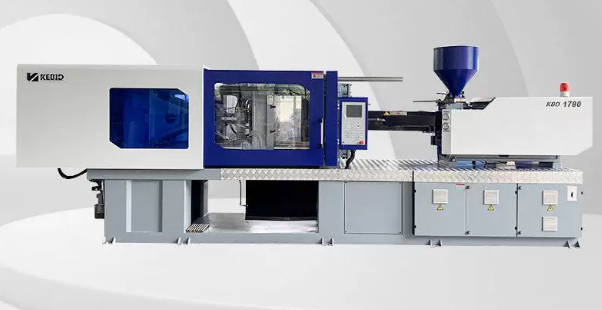
Injection molding is a forming manufacturing process. Plastic pellets are melted under high temperature, then injected into a precision machined mold cavity under high pressure. After cooling, solidification and ejection, identical plastic parts are produced continuously in large quantities.
The whole production system centers on custom molds. Once the mold is completed, thousands of identical parts can be manufactured rapidly, which is the biggest competitive advantage of injection molding for mass production.
2. Key Differences Between CNC Machining & Injection Molding
2.1 Cost Structure
CNC Machining There is no expensive mold investment upfront. Clients only pay for raw materials, machine running time and labor processing fees. It is extremely economical for one-off prototypes and small batch orders without large preliminary capital expenditure.
However, the unit cost barely drops as order volume grows. CNC machining becomes cost-prohibitive when order quantity reaches 100,000 pieces or more.
Injection Molding Buyers must bear high mold fabrication charges at the initial stage, alongside lengthy mold development cycles, resulting in high entry costs. But once molds are finished, each molded part costs very little. The larger the production batch, the lower the average unit cost, perfectly matching mass-volume manufacturing demands.
2.2 Production Lead Time
CNC Machining The workflow is concise. Production commences right after drawing confirmation and programming. Functional prototypes can be delivered within 24 hours, and small batch orders usually finish within 3–5 business days. Without mold fabrication waiting periods, CNC drastically accelerates product iteration for R&D teams.
Injection Molding Pre-production procedures are complicated, including mold design, mold manufacturing, trial injection and repeated mold adjustments. Standard molds normally take 15 to 30 days to finish. Despite slow preparation, injection molding achieves extremely fast cycle time later, churning out tens of thousands of finished plastic parts every single day during mass production.
2.3 Precision & Surface Finish
CNC Machining CNC maintains stable tight tolerance up to ±0.01 mm, satisfying strict precision requirements of aerospace components, medical devices and automated precision machinery. Machined parts feature smooth surfaces free of sink marks, bubbles or gate vestiges common on molded goods. Parts can be directly processed with anodizing, sandblasting, plating and other surface treatments.
Injection Molding Standard injection molding holds tolerances around ±0.1 mm, insufficient for ultra-precision mechanical components. Mass-produced molded products easily suffer shrinkage, flash, air bubbles and warpage. Gate marks remain on most molded surfaces, which demand secondary trimming operations.
2.4 Material Compatibility
CNC Machining CNC works with an extensive range of materials: metals like aluminum alloy, stainless steel, titanium alloy, brass, plus engineering plastics including PEEK, ABS, PC, nylon, POM and acrylic. Almost all rigid industrial materials are machinable via CNC.
Injection Molding Injection molding only supports thermoplastic plastics. It cannot process metal parts or rigid special engineering materials, leading to obvious limitations in material selection.
3. Suitable Application Scenarios
3.1 Projects Better Suited for CNC Machining Services
- New product prototype verification and small-batch pilot runs
- Custom parts with complex irregular geometric structures
- High-precision mechanical parts for medical, automation and aerospace industries
- Mixed-material assembly components
- Urgent short-run orders requiring fast delivery
- Products that need frequent design modifications
3.2 Projects Better Suited for Injection Molded Products
- Mass production of finalized mature consumer products
- Standard plastic structural parts with simple geometry
- Low-cost daily consumer plastic accessories
- Long-term repeat bulk orders with stable design
- Mass consumer goods pursuing ultra-low unit cost
4. Professional Manufacturing Selection Advice
You do not have to rely solely on one manufacturing method for your product development cycle.
Use CNC machining for prototype testing and small-batch trial production first. This method avoids expensive mold rework caused by design defects, greatly lowering your R&D risk and initial investment. After your product passes market validation and the design is fully locked, switch to injection molding for mass production to cut unit cost significantly.
Most global hardware manufacturers adopt the mature combined solution: CNC prototyping + injection molding mass production, balancing rapid iteration in the development stage and cost advantages during mass production.
5. Conclusion
Neither CNC machining nor injection molding is universally superior; each serves different stages of product manufacturing.
CNC machining shines with flexibility, outstanding precision, affordable prototyping costs and no mold dependence, making it the top choice for prototype development and small-volume precision customized production. Injection molding dominates high-speed mass manufacturing with cheap per-unit cost after mold completion, acting as the optimal solution for standardized large-batch production.
Combining these two manufacturing technologies reasonably accelerates your product launch schedule, controls overall manufacturing costs, and helps you build more competitive finished products for global markets.
Extra Call to Action
If you need custom CNC machined metal & plastic prototypes or finished parts, or want to consult whether your product is fit for injection molding mass production, feel free to send your CAD drawings to ImpMach CNC for free technical evaluation and quotation.